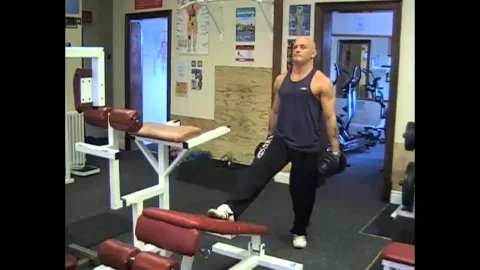
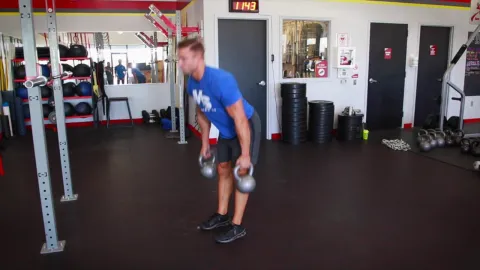
Barbell Half Squat
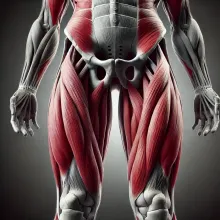
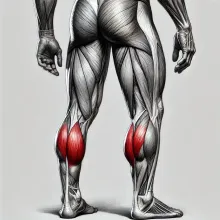
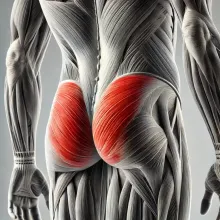
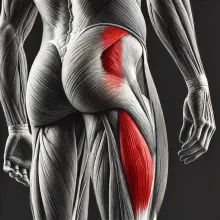
The barbell half squat—also referred to as a partial or quarter squat—is a squat variation that focuses on strengthening the top half of the movement. This variation allows you to use heavier loads than with a full range squat, making it valuable for building maximal strength and overloading the quads in particular. While it doesn't replace full-depth squats for hypertrophy or mobility benefits, it's a strategic tool in performance-focused programs, especially for improving sticking points and reinforcing upright posture under heavy load.
Key Benefits:
- Allows training with heavier loads than a full squat
- Emphasizes the quadriceps and spinal erector engagement
- Helps build strength through the upper portion of the squat
- Useful for athletes training explosive strength and vertical force output
- Can aid in overcoming sticking points or plateaus in full squats
- Set the barbell on a squat rack just below shoulder height and load it with the desired weight.
- Step under the bar and position it across the upper traps, not on the neck.
- Grip the bar with a wide grip, brace your core, and unrack it by standing tall.
- Take a small step back and assume a shoulder-width stance with toes slightly pointed outward.
- With eyes forward and back straight, initiate the descent by pushing your hips slightly back and bending the knees.
- Lower your body approximately 12 inches or until you reach half-squat depth, then pause briefly.
- Drive through your heels to return to the starting position without locking out the knees.
- Repeat for the desired number of repetitions.
- Prioritize control—don’t bounce at the bottom or rely on momentum.
- Maintain tight core engagement to prevent lumbar extension under load.
- Push evenly through the full foot (heel, big toe, little toe) for balance and force distribution.
- Don’t lean excessively forward—keep a vertical torso to emphasize quad loading.
- This movement is best used as a supplement to full squats, not a replacement.
🔥 The barbell half squat is an effective method to build top-end strength and quad power. Incorporate it strategically into your training plan to boost squat performance, reinforce posture under load, and break through strength plateaus.
Gym Mates