2 minutes reading time
Banded Conventional Deadlift
Advanced
Equipment
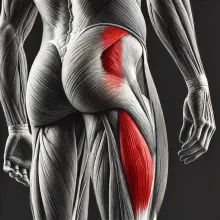
Hamstrings
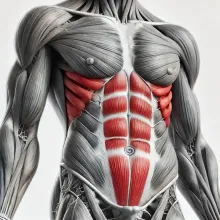
Abs
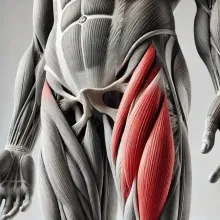
Adductors
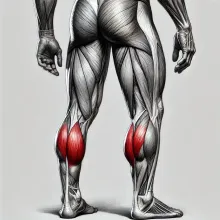
Calves
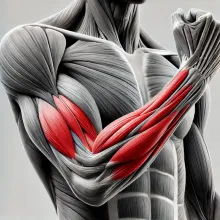
Forearms
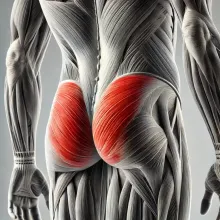
Glutes
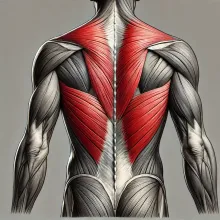
Lats
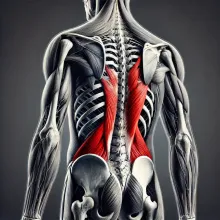
Lower Back
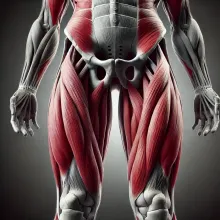
Quads
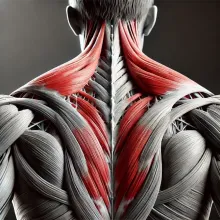
Traps
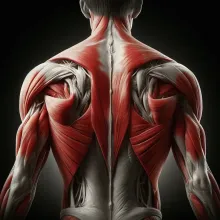
Upper Back
Equipment
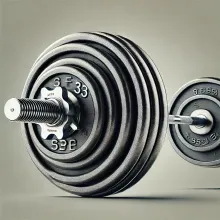
Barbell
Exercise Type
Strength
Mechanics
Compound
Force Type
Hinge (Bilateral)
The Banded Conventional Deadlift is a powerful posterior chain movement that uses bands for accommodating resistance. This variation challenges the hamstrings, glutes, spinal erectors, lats, traps, and calves by increasing load as the bar ascends. It’s ideal for athletes and lifters seeking to develop explosive hip drive and learn how to maintain tightness during the lift.
Key Benefits:
- Improves hip extension strength and power
- Enhances upper back and lat engagement
- Teaches lifters to maintain proper bar path under load
- Reinforces "lockout" phase due to increased band tension
- Boosts posterior chain hypertrophy and neuromuscular coordination
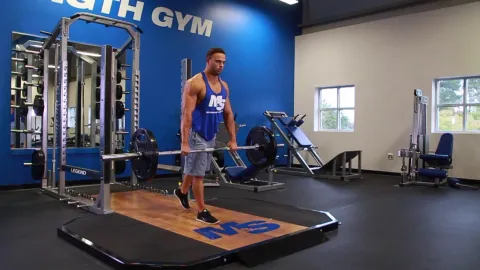
- Load the bar with plates and loop a resistance band from one sleeve to the other, anchored under your feet.
- Stand on top of the band with your feet hip-width apart, barbell over your shoelaces.
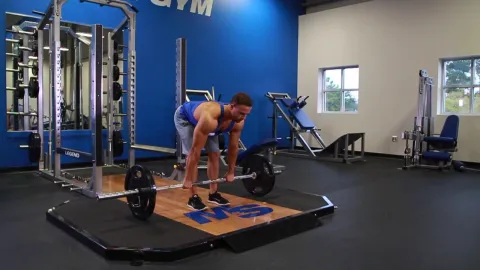
- Hinge at the hips and lower your torso until parallel to the floor.
- Grab the bar with a shoulder-width, double overhand grip.
- Take a breath, pull slightly on the bar, and let your hips drop naturally (“pull the slack out of the bar”).
- Engage your lats by imagining you're crushing oranges in your armpits. Armpits should align over the bar.
- Drive through your whole foot and push the floor away as you lift.
- Lock your hips and knees simultaneously at the top, then hinge back to lower the bar.
- Reset and repeat for the desired number of reps.
- Keep your armpits over the bar and midfoot to maintain a vertical bar path.
- Don’t squat the weight—start with hips higher than a typical squat position.
- Engage lats using cues like “shoulder blades in your back pockets” or “straight arm pulldown”.
- Chest should stay tall—lat engagement typically takes care of this cue.
- Choose neck position (neutral or slightly extended) based on your anatomy and comfort.
- Focus on keeping shins vertical to maintain leverage.
- Experiment with toe angles—some lifters perform best slightly outward or neutral.
- Do not retract scapula—this shortens arm length and increases ROM unnecessarily.
- Wrap your thumbs and grip hard—no false grip here.
- Bar doesn’t need to scrape your shins unless your leverages require it.
- Drive through the full foot: big toe, little toe, heel.
- Keep elbows locked to avoid biceps strain—especially under heavy loads.
- Beginner lifters should practice “pulling the slack” before full execution.
- For singles, it’s okay to drop the bar; for reps, control the descent while avoiding fatigue.
- Feet too wide? You’ll likely cause valgus collapse or need a wider grip—stick with hip-width stance.
💥 The Banded Conventional Deadlift is a game-changer for lockout strength, control, and bar speed. Add it to your pulling days for serious posterior chain development. 🚀
Gym Mates
Explore by Muscle


