2 minutes reading time
Anderson Squat
Intermediate
Equipment
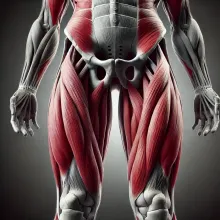
Quads
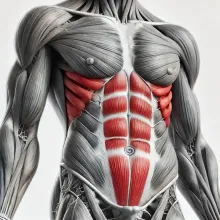
Abs
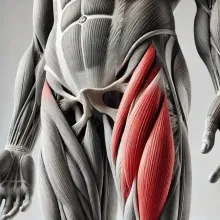
Adductors
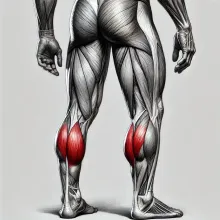
Calves
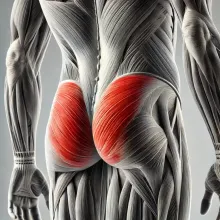
Glutes
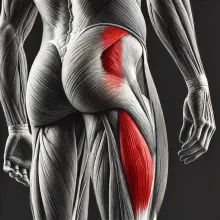
Hamstrings
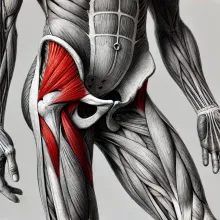
Hip Flexors
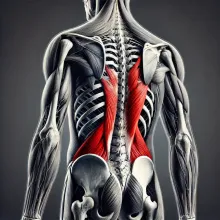
Lower Back
Equipment
Barbell
Exercise Type
Strength
Mechanics
Compound
Force Type
Push (Bilateral)
The Anderson Squat is a pin squat variation that isolates the top portion of the squat movement. By starting from a dead stop at the bottom, it eliminates the stretch reflex and places greater demand on the quads, glutes, and core to initiate movement. It’s especially useful for lifters struggling with squat lockout or aiming to build confidence and control with heavier loads in partial ranges of motion.
Key Benefits:
- Improves strength in the top portion of the squat
- Enhances control and positioning under heavier loads
- Eliminates stretch reflex for more raw strength development
- Strengthens glutes, quads, hamstrings, and core
- Allows safe practice of heavier loads due to pin support
- Set the safety pins in a power rack at about waist height or slightly below.
- Place the barbell on the pins and ensure it's centered.
- Grip the bar with your pinkies on the smooth ring.
- Get under the bar so it rests on your traps or rear delts, depending on your squat style.
- Take a deep breath and brace your core while aligning elbows with your torso.
- Drive through the floor using your full foot to stand up and fully extend your hips and knees.
- Exhale at the top and return the bar with control to the pins.
- Toe angle is individual—experiment to find the most comfortable position for your hips and knees.
- Bend the bar across your back by pulling it into your traps to create upper back tightness.
- Try a false (thumbless) grip if you experience wrist or elbow discomfort.
- Distribute weight across your entire foot—big toe, little toe, and heel should stay grounded.
- Think about sitting your back pockets straight down rather than back for an efficient bar path.
- Some knee travel over the toes is okay—as long as knees don’t collapse inward or outward excessively.
- Drive your traps into the bar and keep elbows tucked toward the body during the concentric phase.
- Test neck position—neutral chin tuck vs. slightly looking up—to match your biomechanics.
- If using a low-bar position, expect more forward lean and hip loading.
- Let the knees track over or slightly outside the second toe—avoid excessive outward flare.
💪 The Anderson Squat is a powerful tool to develop strength at the sticking point, reinforce posture, and push your squat numbers up. A must-have movement for powerlifters and serious strength athletes. 🚀
Gym Mates

Explore by Muscle


